


Scleral Lenses vs. Standard Contacts: What to Expect During a Specialty Lens Fitting in Dunkirk
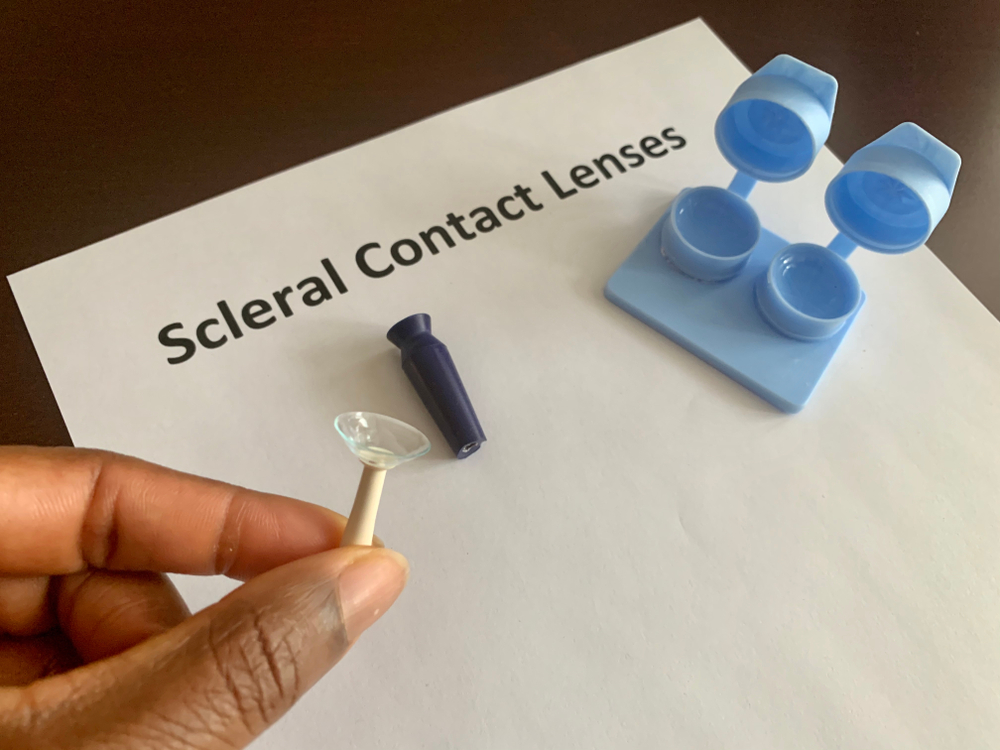
Scleral Lenses vs. Standard Contacts: What to Expect During a Specialty Lens Fitting in Dunkirk
Contact lenses are not one-size-fits-all. Standard soft contacts work well for many people, but they may not provide stable vision or lasting comfort when the cornea has an irregular shape or the eyes are affected by significant dryness. In these cases, scleral lenses may offer a more personalized solution. Understanding how scleral lenses differ from standard contacts can help you prepare for a specialty lens fitting in Dunkirk.
How Scleral Lenses Differ From Standard Contacts
Standard soft contact lenses sit directly on the cornea and move slightly with each blink. They are available in many prescriptions and can correct common conditions such as nearsightedness, farsightedness, and astigmatism.
Scleral lenses are larger rigid gas-permeable lenses. Instead of resting on the cornea, they vault over it and rest on the white part of the eye, called the sclera. The space between the lens and cornea is filled with preservative-free saline, creating a smooth optical surface and a fluid reservoir.
This design can provide clearer, more consistent vision for patients with keratoconus, irregular corneas, high astigmatism, or severe dry eye. It can also reduce the irritation caused by a lens rubbing against a sensitive or uneven corneal surface.
Signs You May Need a Specialty Lens Evaluation
A specialty contact lens fitting may be recommended when standard lenses do not provide the comfort or clarity you need. Common reasons include:
• Blurry or fluctuating vision while wearing contacts
• Frequent dryness, burning, or irritation
• Difficulty correcting high or irregular astigmatism
• A diagnosis such as keratoconus or another corneal condition
• Contact lenses that shift, dislodge, or feel unstable
An eye exam helps determine whether scleral lenses or another specialty contact lens design is appropriate for your eyes.
What Happens During a Scleral Lens Fitting?
Your fitting begins with a detailed evaluation of your vision, eye health, tear film, and corneal shape. Corneal topography or keratography may be used to create a detailed map of the front surface of the eye. These measurements help guide the initial lens selection.
A diagnostic scleral lens is then placed on the eye. Our eye doctor evaluates how well it vaults over the cornea, where it rests on the sclera, and whether the fluid reservoir has the proper depth. Your vision is also tested through the lens so the prescription can be refined.
Because scleral lenses are customized, the process may require more than one visit. Follow-up appointments allow the fit, prescription, and comfort to be adjusted as needed.
Learning to Use and Care for Scleral Lenses
Before taking your lenses home, you will learn how to insert, remove, clean, disinfect, and fill them correctly. Scleral lenses require preservative-free saline before insertion and should never be placed on the eye without fluid.
Consistent cleaning and scheduled follow-up care help protect eye health and support comfortable wear. With practice, most patients become more confident handling their lenses and incorporating them into their daily routine.
Schedule your specialty contact lens fitting with Dunkirk Vision to discover whether scleral lenses can provide the clear, comfortable vision you need. Visit our office in Dunkirk, MD, or call (443) 964-6730 to book your appointment.




Office Hours
- Monday 9:00am - 5:00pm
- Tuesday 9:00am - 5:00pm
- Wednesday 9:00am - 7:00pm
- Thursday 9:00am - 1:00pm
- Friday 9:00am - 5:00pm
- Saturday Open select Saturdays by appointment only
- Sunday Closed
© 2026 Dunkirk Vision | All rights Reserved | Accessibility Statement | Privacy Policy | Sitemap
Powered by:
